The Challenge
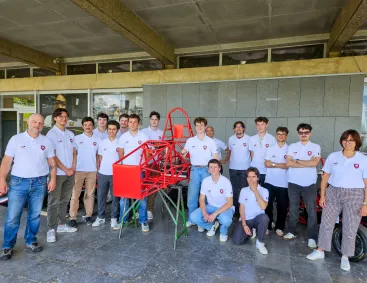
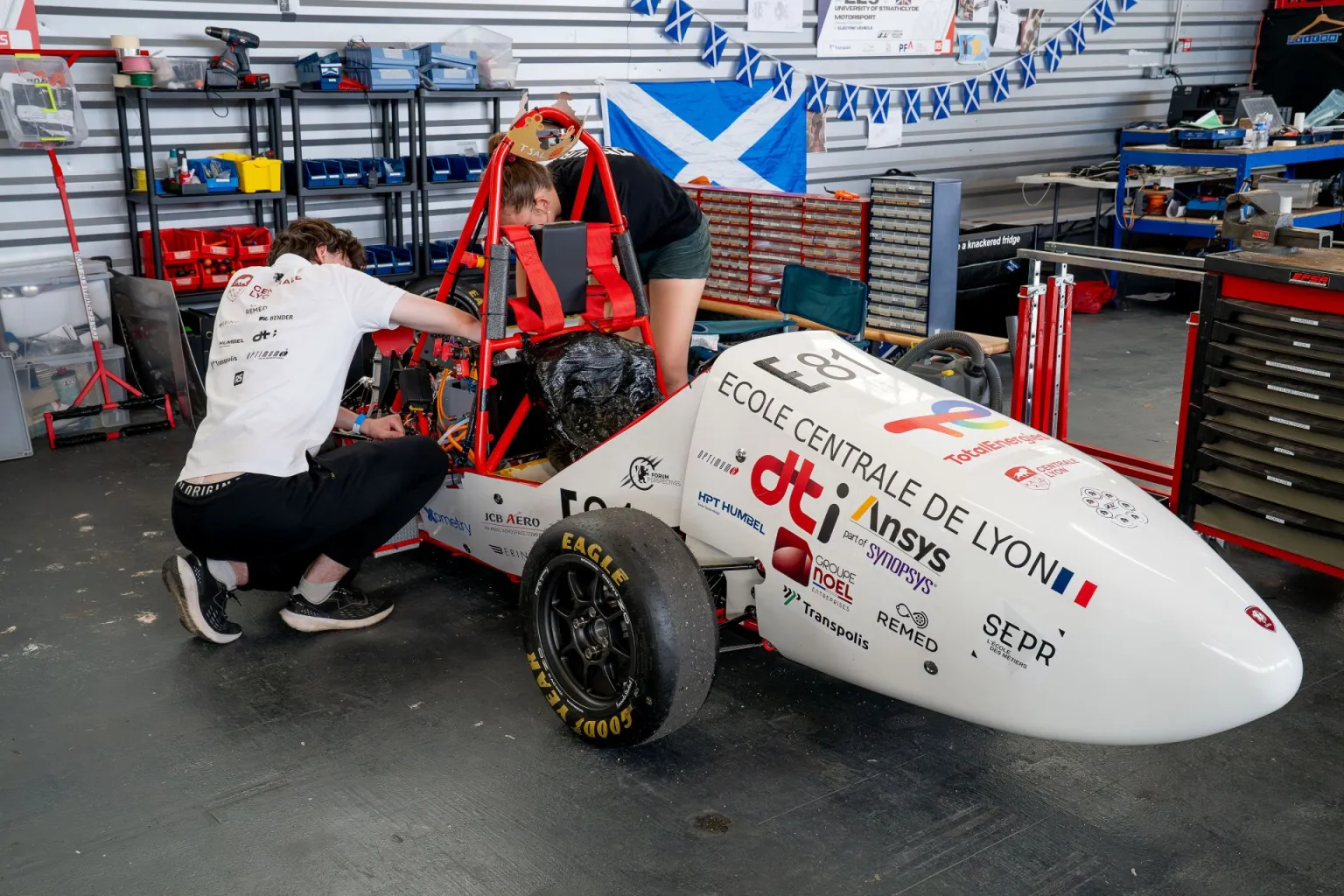
In the two previous generations, EPSA started with a chassis inherited from the internal combustion engine, into which it housed a single electric motor and a battery constrained by the remaining space. This year, the team reversed the approach. “We really started from the heart of the powertrain—with a twin-motor rear layout and a central space for the battery—and built the chassis around it,” explains Jérôme Delachanal, who coordinates the FS@ECL program. We load the battery from the rear, whereas on previous vehicles, it had to be loaded from below, which required lifting the car. ” The battery casing, made of honeycomb carbon composite, and its battery management system (BMS) have also been redesigned.
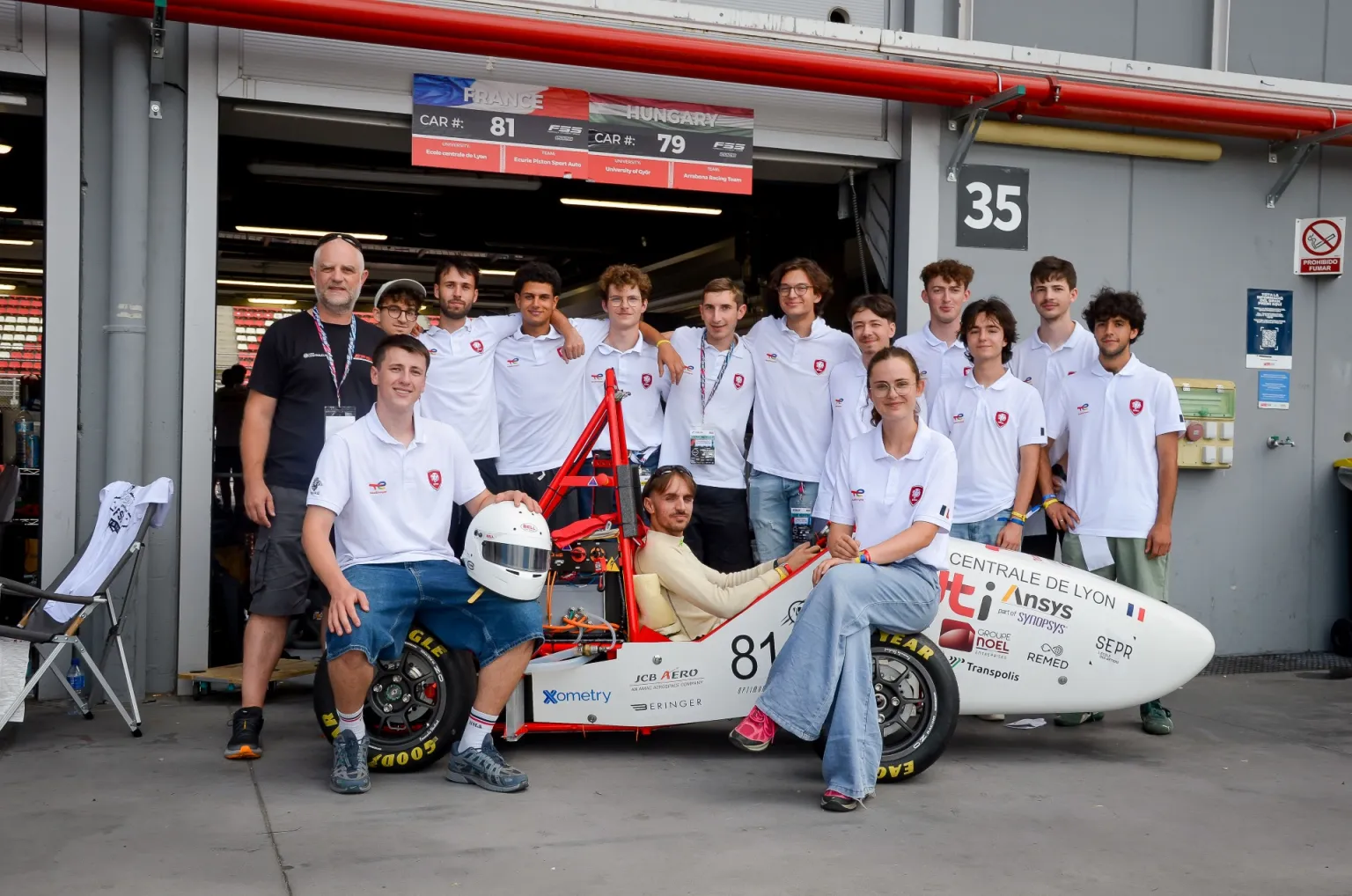
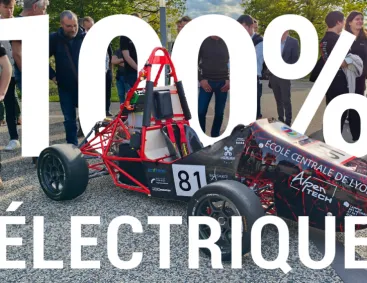
Osiriz, unveiled on campus on May 20, is thus the team’s third-generation electric vehicle, following the Valkyriz (2023, first electric car) and the Artemiz (2025, first functional vehicle). By the numbers: 230 kilograms, 110 chevaux, in-wheel motors, and an 8% reduction in chassis weight compared to its predecessor.
Cost
Organizing the project involves coordinating 34 students—compared to the usual 40—across three technical areas (mechanical, electronics, battery), plus communications and finance, under the supervision of an operational technical committee of five advisors (equivalent to two full-time positions), coordinated by Jérôme Delachanal alongside Sylvie Milleret, Bertrand Houx, and Pierre-Louis Jaeger. The season’s budget, ranging from 140,000 to 145,000 euros, combines traditional funding from the school with support from REMED—a program led by Centrale Lyon, INSA Lyon, and Claude Bernard Lyon 1 University, as well as from France 2030. This support also comes from industry partners, including TotalEnergies, the team’s main sponsor for over seventeen years.
Jérôme Delachanal puts this budget into perspective: teams that compete at the highest level in Formula Student operate on budgets ranging from 400,000 to one million euros per season; EPSA’s budget is therefore less than half that of an average team. Conversely, most French student-run teams have neither the financial support of an educational institution nor dedicated paid staff, both of which EPSA benefits from. Compared to German or Swiss teams, the gap stems as much from budget differences as from the size of the institutions and a more deeply rooted culture of Formula Student and motorsports. Another student on the team confirms this in his own way: German schools of this type are often backed by manufacturers, with dedicated test benches and sponsors—a close industrial connection that France’s generalist “grandes écoles” do not have to the same extent.
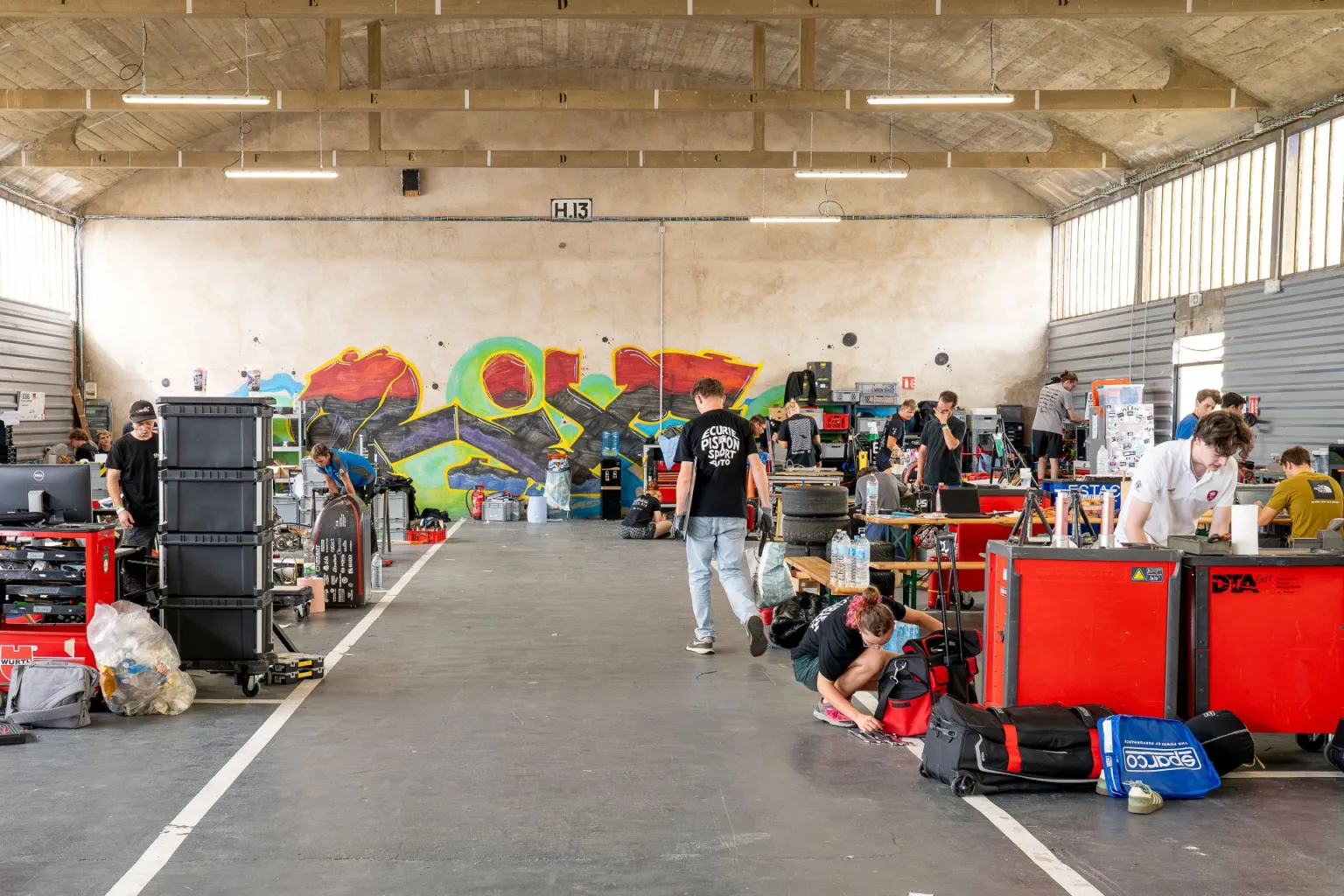
This season, the team competed in two Formula Student events, in Spain and France. Transpolis is the final stop. And as is the case everywhere, it begins with scrutineering: a series of mechanical, electronic, and battery checks, followed by braking, leak, and tilt stability tests, which determine eligibility to start the dynamic events.
We received very positive feedback during scrutineering, particularly regarding the mechanical inspection, which was approved with the exception of the battery component.
Jérôme Delachanal
The Verdict
“We got very good feedback during scrutineering, especially the mechanical inspection, which was approved except for the battery component,” says Jérôme Delachanal. “We presented some features that were very well received, even though the car isn’t fully operational yet.”
The verdict came at the end of the day: the car did not get the green light for the dynamic tests. In its official report, the team will specify the exact cause: a non-compliance identified with the battery charger, as the battery itself showed no defects. Only a few points were missing from the regulations.
“ “This year we faced a buildup of small details—none of which, taken individually, are deal-breakers—but taken together, they mean we can’t correct everything before the end of the competition,” summarizes Jérôme Delachanal. “For this year, we won’t be able to participate in the dynamic tests.”
This was a clear disappointment for the team, several of whose students were still hoping to compete at the time of their interview, before the final announcement. But the program coordinator puts it into perspective: “There’s disappointment—everyone wanted to compete—but there are a lot of positives. This year, the team has re-learned skills that had been lost in previous years.” The judges, for their part, noted significant improvement in the static events compared to the previous year.
Review and Challenges for the Future
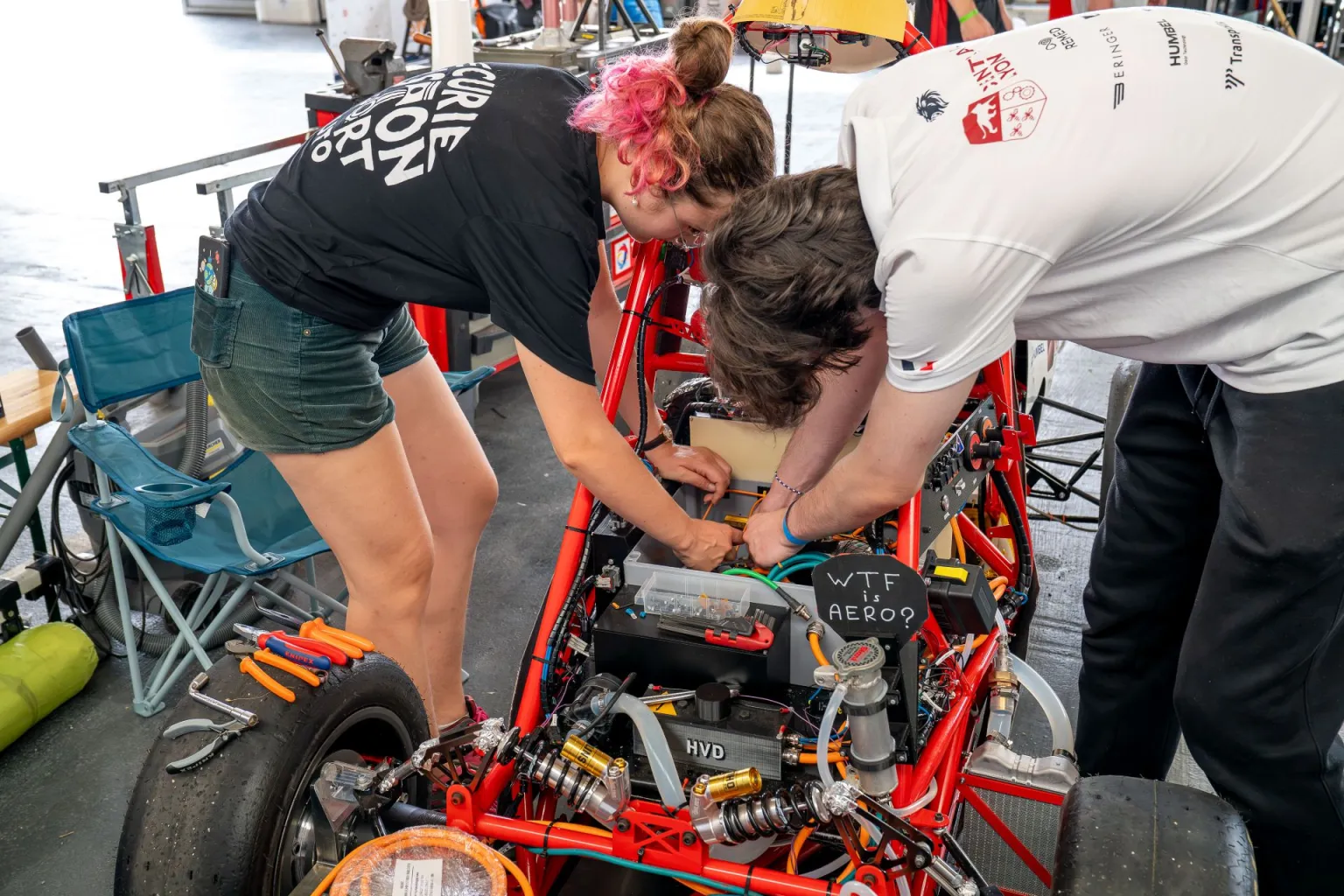
Starting from the powertrain to build an entire car means rebuilding expertise that the team no longer had. An EPSA student put it this way: “The goal of this car was to build a solid, sound foundation so that next year we can build a similar car and start competing at a high level.” ” At Transpolis, the final stop of the season, Osiriz did not run dynamic tests. But the team has already identified what needs to be corrected—primarily on the load circuit—and several designs for the next car are already under consideration, with a clear goal: to complete it by April or May to free up, for the first time, actual track time and work on analyzing the car’s data to refine the electronic controls.
For Jérôme Delachanal, the stakes go beyond competition: “We have students who are well-trained and receive a high-quality, broad-based education. And being able to transform that into something everyone can see—something that’s high-performing and of high quality—is also part of representing the school. ” This institutional foundation is also evident within Formula Student France, co-founded in 2023 by Mathieu Jacquet—a 2018 graduate of Centrale Lyon and former president of EPSA—who joined the team in 2021 with Invictus, the team’s internal-combustion vehicle that set an acceleration record at Hockenheim.
“It shows that I want to be in a field where I learn a lot, where I get to dabble in a little bit of everything,” summarizes a student on the team. At Centrale Lyon, EPSA remains a rare program where engineering students manage—from funding to the track—a complete technical project across multiple generations. Osiriz did not race at Transpolis. The next car, however, is already taking shape.