World champion, then all over again
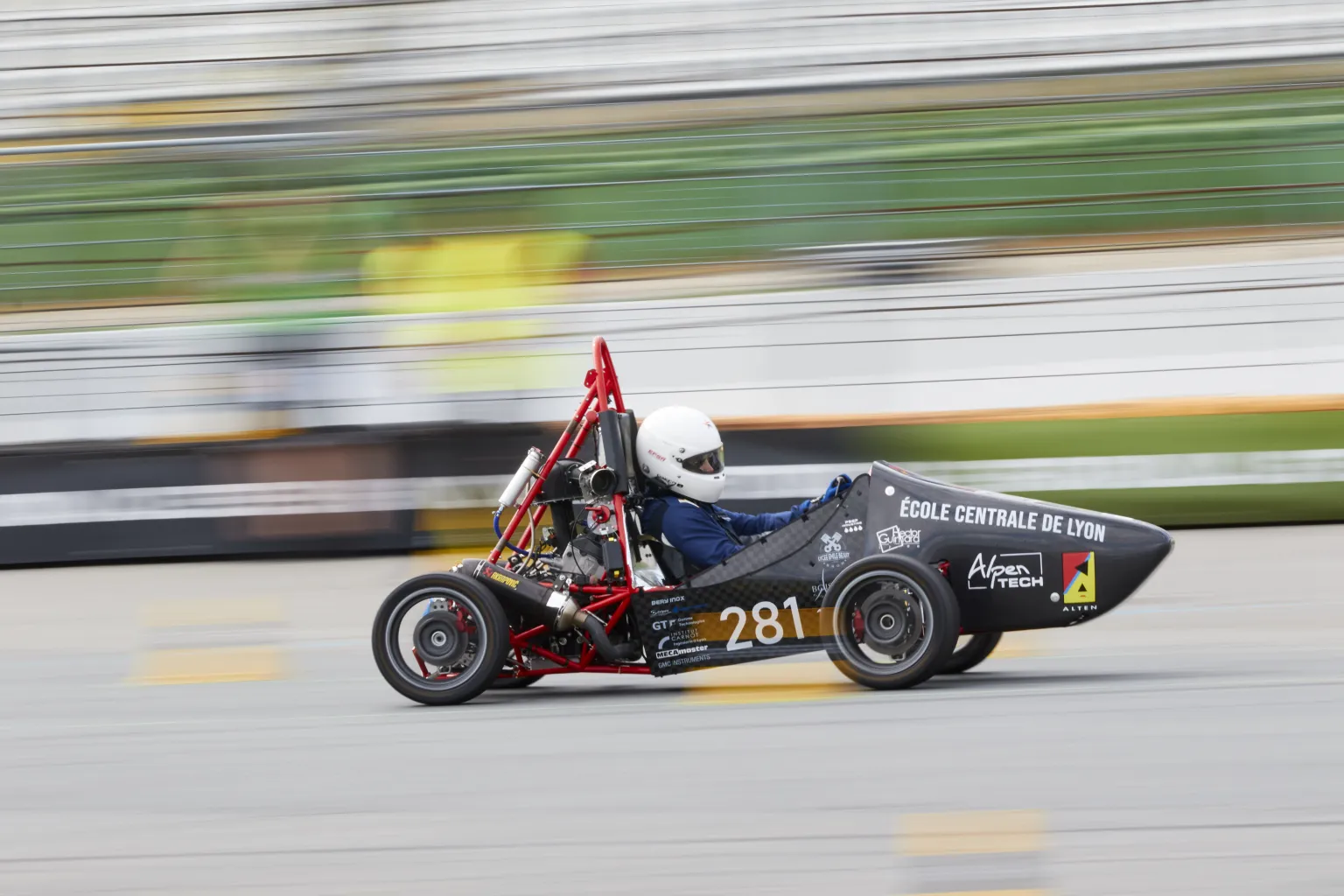
Founded in 2002 by students from Centrale Lyon, Ecurie Piston Sport Auto has built its track record on two decades of thermal racing. Winner of the SIA general prize in 2008 and 2009, and the Michelin Innovation Prize on several occasions, the team forged a solid reputation on European circuits before taking the plunge into Formula Student in 2014. The summer of 2021 marked the high point of this period: engaged in three competitions in the Netherlands, Austria and Germany, the team won the World Championship title on the Hockenheim circuit with its Invictus prototype, accompanied by three podium finishes.
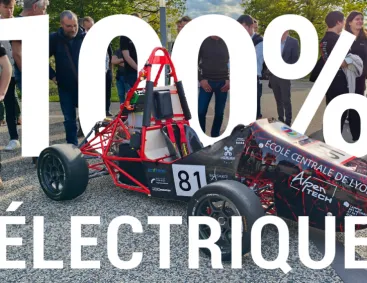
A year later, the team took a structuring decision: to abandon combustion propulsion and switch to electric. The change was total. The skills accumulated on the combustion engine are not directly transferable. You almost have to start from scratch.
Valkyriz, presented in 2023, is the team's first electric vehicle. It's not designed to win: its role is to serve as a test bed and learning prototype, the culmination of three seasons of combined work. In 2025, Artemiz took a further step forward by becoming the first electric vehicle to comply with competition regulations, enabling the team to take part in static events. The dynamic events, however, still await.
A new beginning built on details
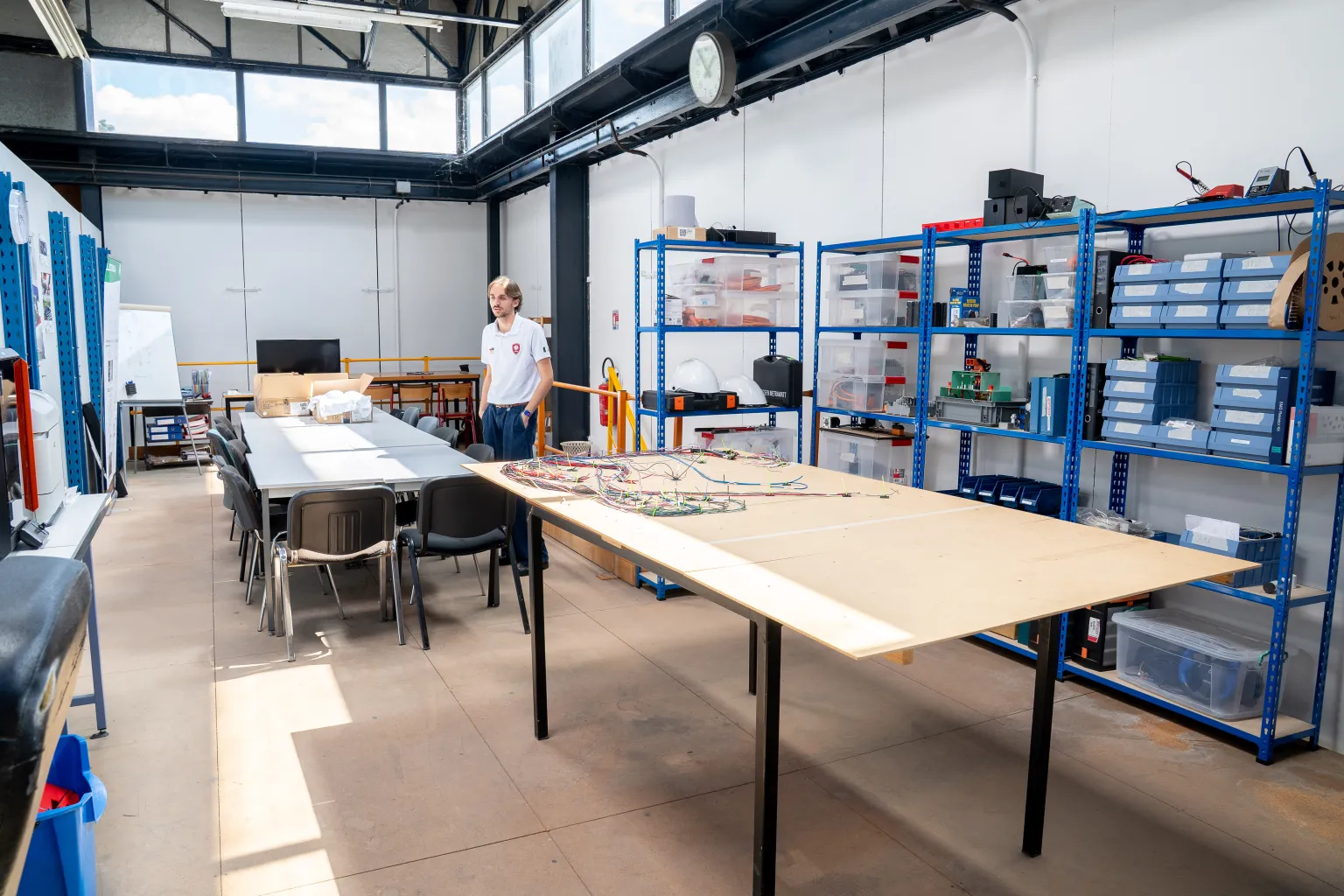
For the 2026 season, EPSA's renewal isn't limited to the vehicle. The team has moved into new premises on the campus: a 200 m² workshop spread over two floors, complemented by an 80 m² paddock. A space designed to work differently, with zones dedicated to each activity and a storage area redesigned from top to bottom. It was in this restructured environment that the 34 students of the 2026 season worked throughout the year.
The internal organization has also evolved. The stable is now organized around three technical divisions - mechanics, electronics and batteries - to which are added a communications division and a finance division. Each division has its own manager, coordinated by a technical director and a project director dedicated to the current season. Above them, an Operational Technical Committee of five supervisors, including two full-time equivalents, ensures the program's pedagogical and technical follow-up.
This framework is not insignificant. The FS@ECL program, in which EPSA has been involved since 2023, is backed by the France 2030 scheme via the REMED program, Réussir l'Efficience des Mobilités Décarbonées. The annual budget is 140,000 euros, 40% more than in thermal years. The students are dealing with real constraints: multi-pole coordination, technical arbitration under time pressure, relations with a dozen industrial partners including TotalEnergies, the main sponsor.
It's in these conditions, close to those of an industrial project, that Osiriz was conceived.
What three seasons of learning produce
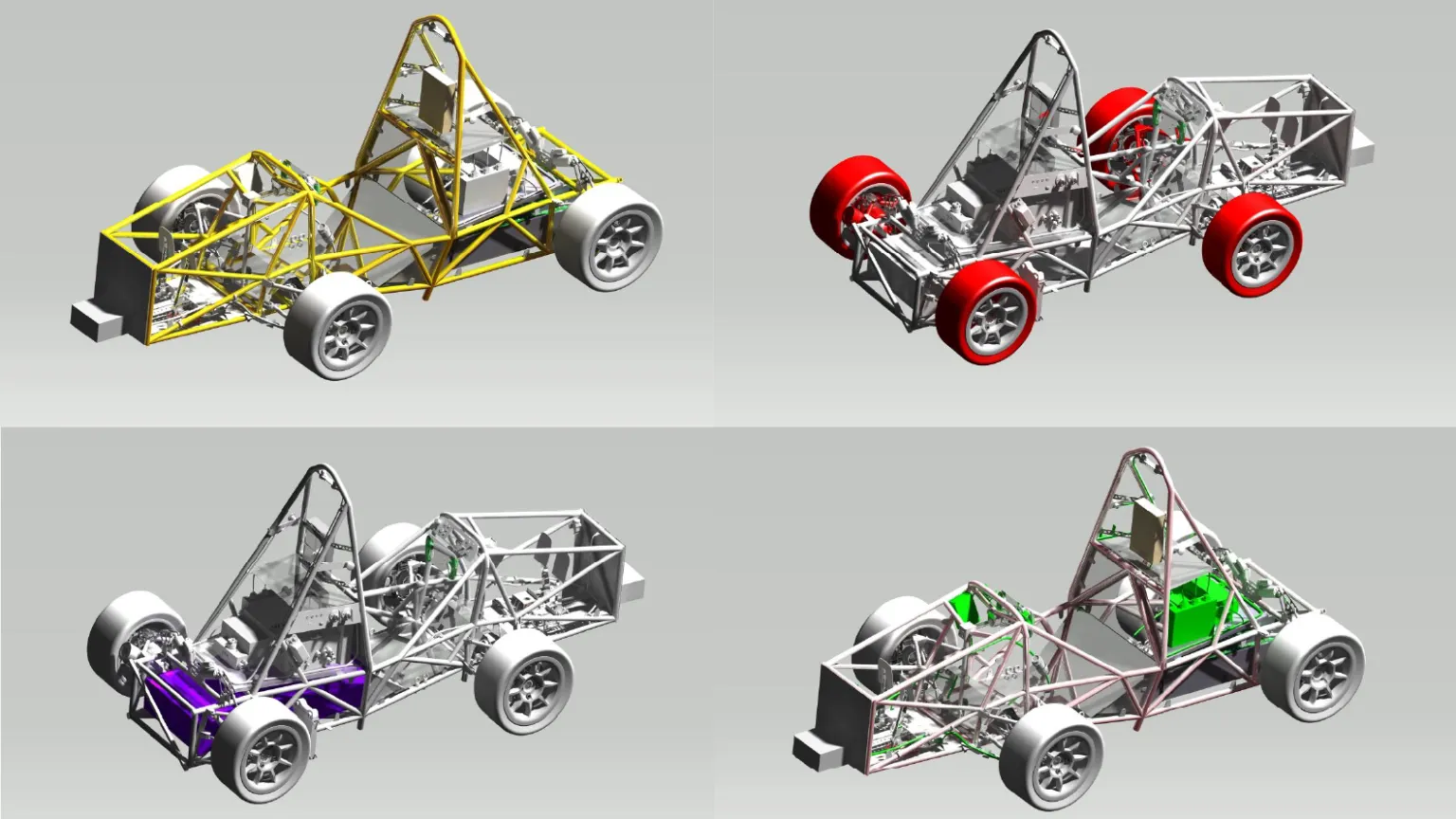
Osiriz is the direct response to what the previous two seasons have learned. It all starts with the chassis. For the first time, it has been designed around the battery, not independently of it. This seemingly simple choice frees up space, redistributes weight and allows the integration of a larger battery without weighing down the whole. The result: 8% less mass than the previous generation.
This architecture paves the way for Osiriz's most structuring innovation: motors integrated directly into the wheels. By eliminating the drive shafts, the team reclaims space and gains in precision control. This is what makes torque vectoring possible, a system that distributes torque independently between the wheels in real time. The algorithms were developed in-house by the electronics division. On the track, the effect is direct: better stability in bends and increased traction on exit.
The battery, finally, has been thoroughly rethought. On-board energy has been increased to 6.5 kWh. Its casing, now in composite material, drops from 35 kg to 6 kg.
The result of these combined choices: a vehicle weighing 200 kg, 110 horsepower, aiming for 5.1 seconds at Skid Pad and 4 seconds at acceleration. Two targets that the team had never been able to set itself since its switch to electric power.
From now until September, assembly, testing, then competitions
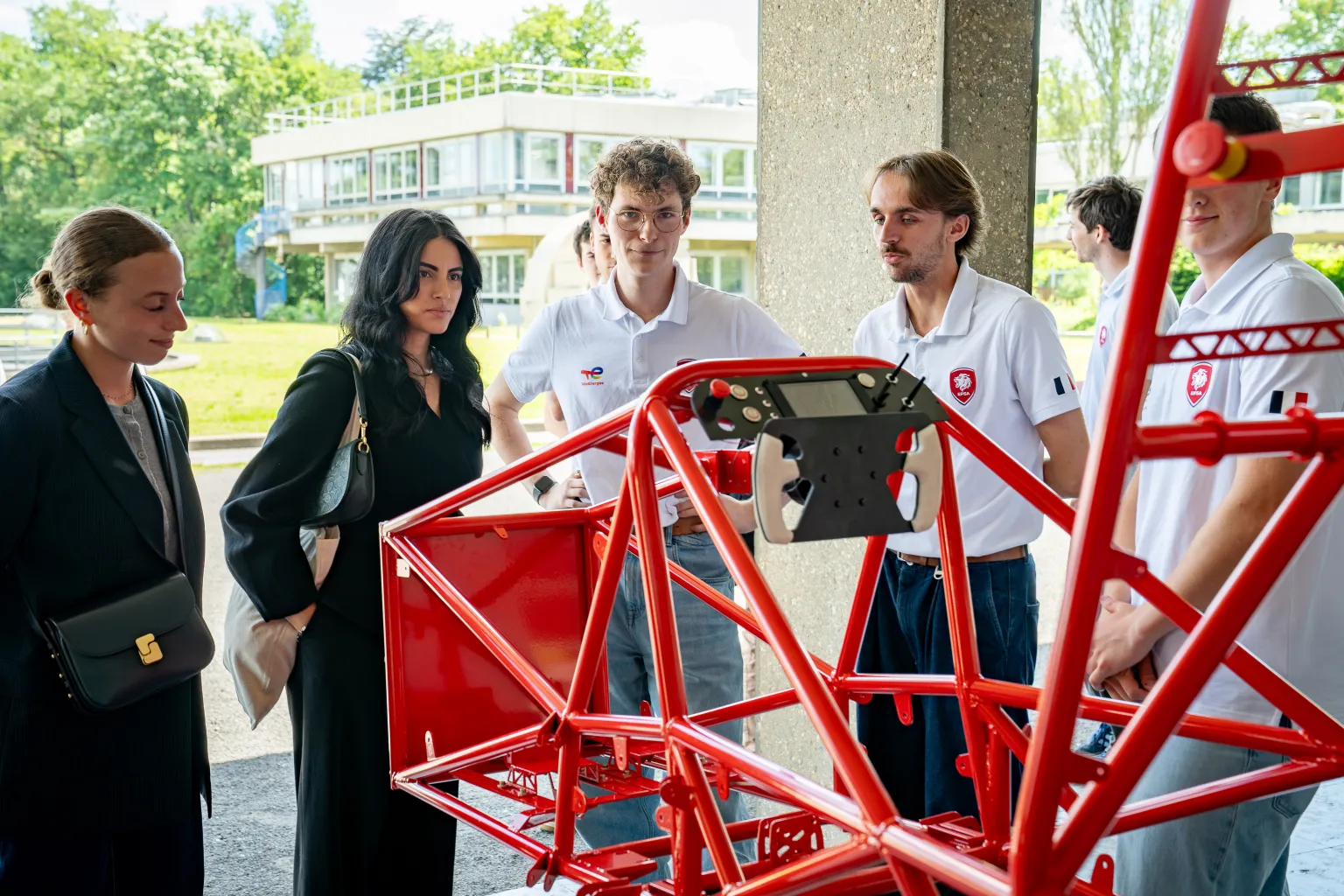
At the Roll Out, after a full presentation of the project in the amphitheater, Osiriz is not yet a car. The chassis is there, the sub-systems are designed and being manufactured, but complete assembly of the vehicle is scheduled for mid-June. That's when testing and tuning will begin, a critical phase for any competition prototype.
The deadline is September 2026. EPSA has qualified for four Formula Student competitions: Spain, Switzerland, France and Portugal. This will be the first time since the switch to electrics that the team will take part in the dynamic events, those that count for two-thirds of the points in the overall standings.
EPSA in brief
The Ecurie Piston Sport Auto is a student association unlike any other. Founded in 2002 at Centrale Lyon, each year it brings together some forty student engineers who design and build from A to Z a competition prototype entered in Formula Student, an international student championship present in some twenty countries.
The project operates like a small business: annual budget of 140,000 euros, dedicated premises on campus, permanent supervisors, industrial partners to manage. Students take on real responsibilities, from mechanical design to financial management, communications and sponsor relations. Since 2023, the program has been labeled France 2030 via the REMED scheme, Réussir l'Efficience des Mobilités Décarbonées, and run jointly by the school under the FS@ECL name.
Financial partners for the 2026 season include TotalEnergies, main sponsor for over 17 years, as well as Bender, Humbel Gear Technology, Forsee Power, DTI, JCB Aero and Transpolis.
See the EPSA website