It all starts with a click in the lecture hall
In 2019, Armand Pattée joins Centrale Lyon. Enrolled in the General engineering curriculum, he developed a scientific method and a critical mind. Very soon, however, he felt the need to explore other horizons, without yet knowing precisely where this would lead him.
It was in his second year, during the new academic year lecture hall, that a piece of information particularly caught his attention: a dual curriculum Engineer-Doctor existed. At the time, the scheme remained confidential and still under construction.
When I heard about it, I immediately said to myself: this is for me.
For Armand, the trigger was immediate. No long-cherished project, no patiently constructed vocation, the idea simply imposed itself. This moment marked the beginning of an unprecedented journey, both for the student and for Centrale Lyon.
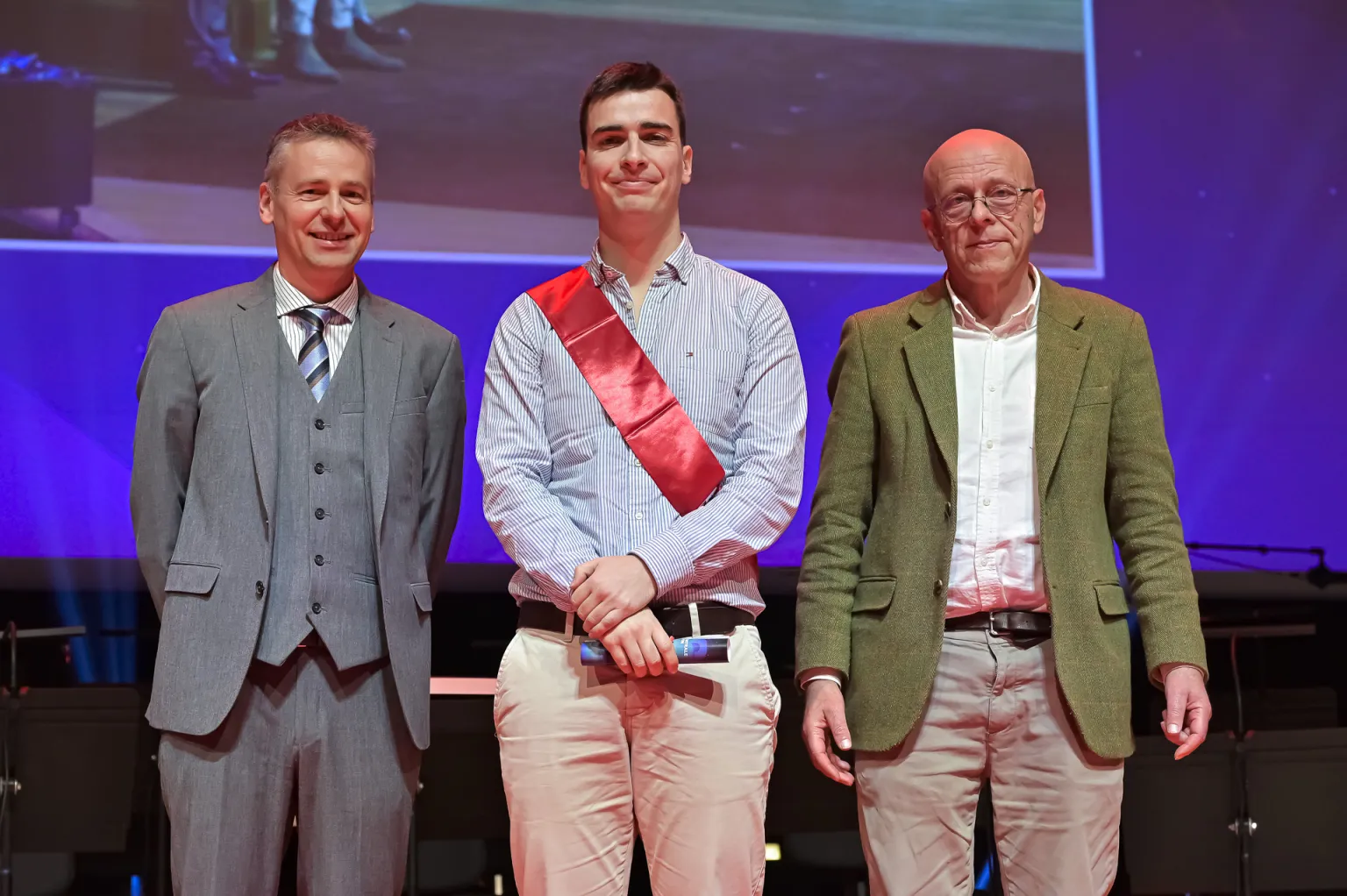
The first medical engineer at Centrale Lyon
In 2026, Armand Pattée thus becomes the first double graduate Engineer-Doctor from Centrale Lyon. Beyond this individual success, this graduation represents a historic first, coming to fruition as the culmination of an ambitious educational project built in partnership with the Lyon 1 Université and the Hospices Civils de Lyon.
This six-year double degree aims to train profiles capable of crossing the cultures of engineering and medicine, in a context where the boundaries between disciplines are increasingly blurred in the field.
While this first marks an important milestone for the School, Armand, for his part, prefers to put the notion of pioneer into perspective: "Being the first or the fifteenth, basically, doesn't change much. It's not easy for anyone."
A long and demanding double journey
The dual curriculum is based on a progressive articulation between engineering training and medical studies. After completing the General Engineering curriculum, selected students embark on a medical upgrade, before fully integrating medical studies up to the Diplôme de formation approfondie en sciences médicales.
As the first graduate, Armand has evolved within the framework of a still young scheme, which has been refined over the course of the graduating classes. This context has requiredflexibility and adaptability, on both sides, student and teaching staff alike.
For Armand, the main thing remains elsewhere.
The most important thing is not to give up, even when it's hard.
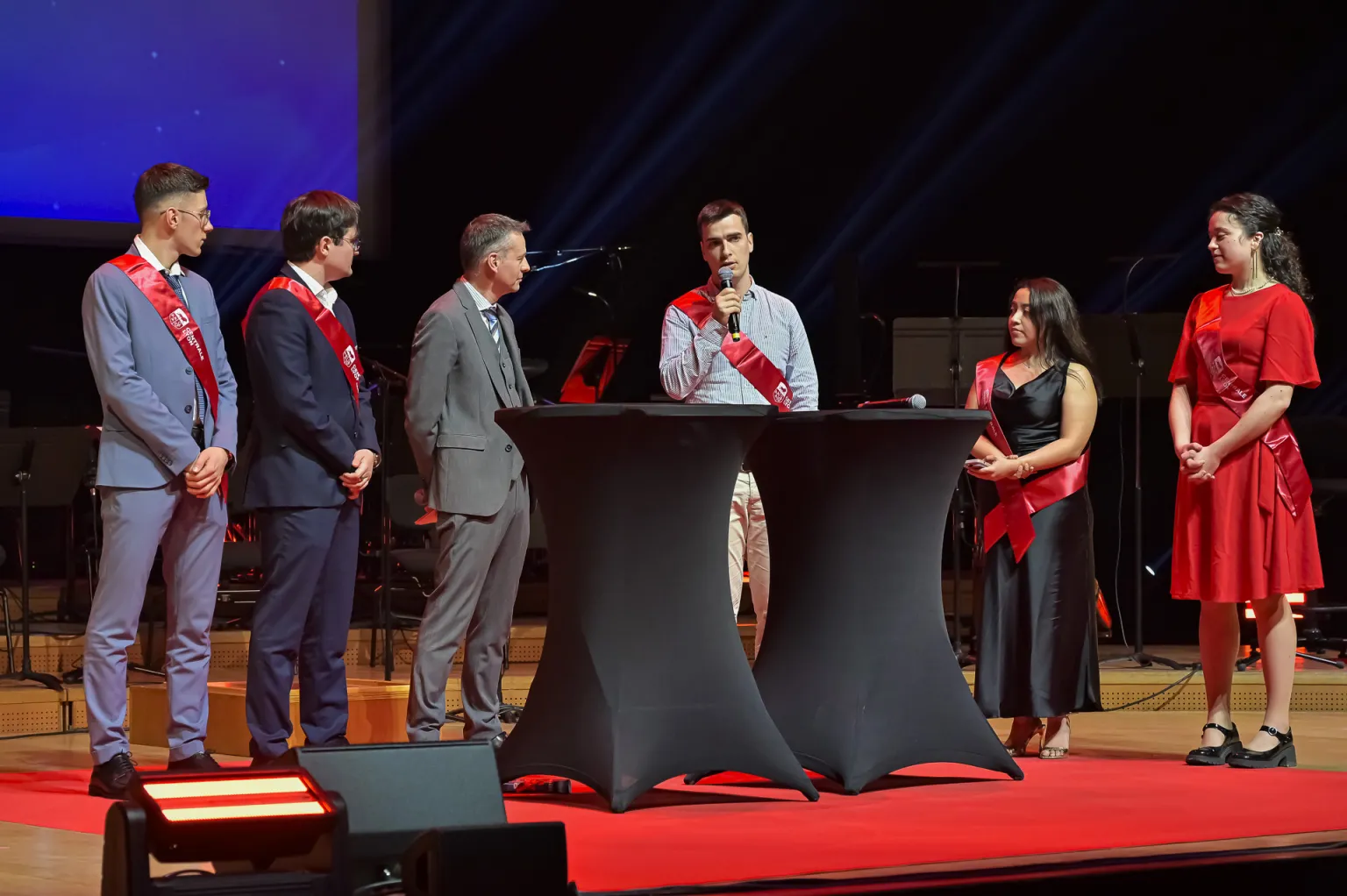
When engineering feeds medicine
Today a general medicine intern in Lyon, Armand fully appreciates what his engineering training has given him. Beyond scientific knowledge, he highlights a method, rigor and critical thinking that are transforming his approach to medicine.
The engineering degree gives me a method for reading scientific articles, being more precise in my research and avoiding wasting time.
This dual skill set makes perfect sense in his professional project: to move into hospital research, where data analysis, understanding protocols and technological innovation play a central role.
A message of perseverance and lucidity
Armand doesn't downplay the difficulty of the course. He stresses the importance of endurance, but also of rest and hindsight. "Even the most motivated have moments of stalling. It's not a failure. You have to learn to rest." A simple message for those contemplating demanding career paths.
Training doctors to cope with complexity
Faced with the growing complexity of healthcare systems, technological advances and the challenges of research and innovation, profiles capable of dialogue between disciplines are becoming essential. The dual Engineering-Physician curriculum seeks to meet this ambition. To train professionals capable of linking clinical practice, scientific research and medical technologies, in the service of public health.
Discover the Doctor-Engineer double degree